

You take two long, skinny boats, cram nine people into each, and then row down the River Thames in London for about 15 minutes.
Sounds simple enough, right? Well, it really is-just like running 100 metres on a track or hitting a ball with a bat.
The charm of the Boat Race lies in that simplicity, but there’s so much more behind this historic event.
The world-famous universities of Oxford and Cambridge have been battling it out for nearly 200 years (their first race happened back in 1829), and the race has had its fair share of drama-crashes, controversies, even a sinking.
This year things kicked off early with plenty of tension already brewing. So what’s this whole Boat Race fuss about? Let The Athletic walk you through it.
It all started with a letter.
Two gentlemen from Oxford and Cambridge went rowing together one day and decided to set up an official race between their schools.
Cambridge sent a challenge letter to Oxford saying: “The University of Cambridge hereby challenge the University of Oxford to row a match at or near London, each in an eight-oared boat during the ensuing Easter vacation.”
Oxford won that very first race in June 1829 at Henley-on-Thames. And honestly, not much has changed since then – it’s still eight rowers per boat racing on the Thames after almost two centuries.
An illustration of the first ever Boat Race, in 1829 (Edward Gooch Collection/Hulton Archive/Getty Images)
What has grown over time though is this fierce rivalry that turned into big business. Up to 250,000 people watch live along the riverbank; millions tune in on TV (BBC One airs it live), and high-end sponsors like Chanel are involved now too.
“You are talking about the ultimate level of sport with the purest values,” said Chanel’s Frederic Grangie.
Purest values? Well… not exactly..
The race has had its fair share of drama almost from day one.
No winner was declared in 1877 because both crews crossed at exactly the same time-a dead heat. There was no VAR back then!
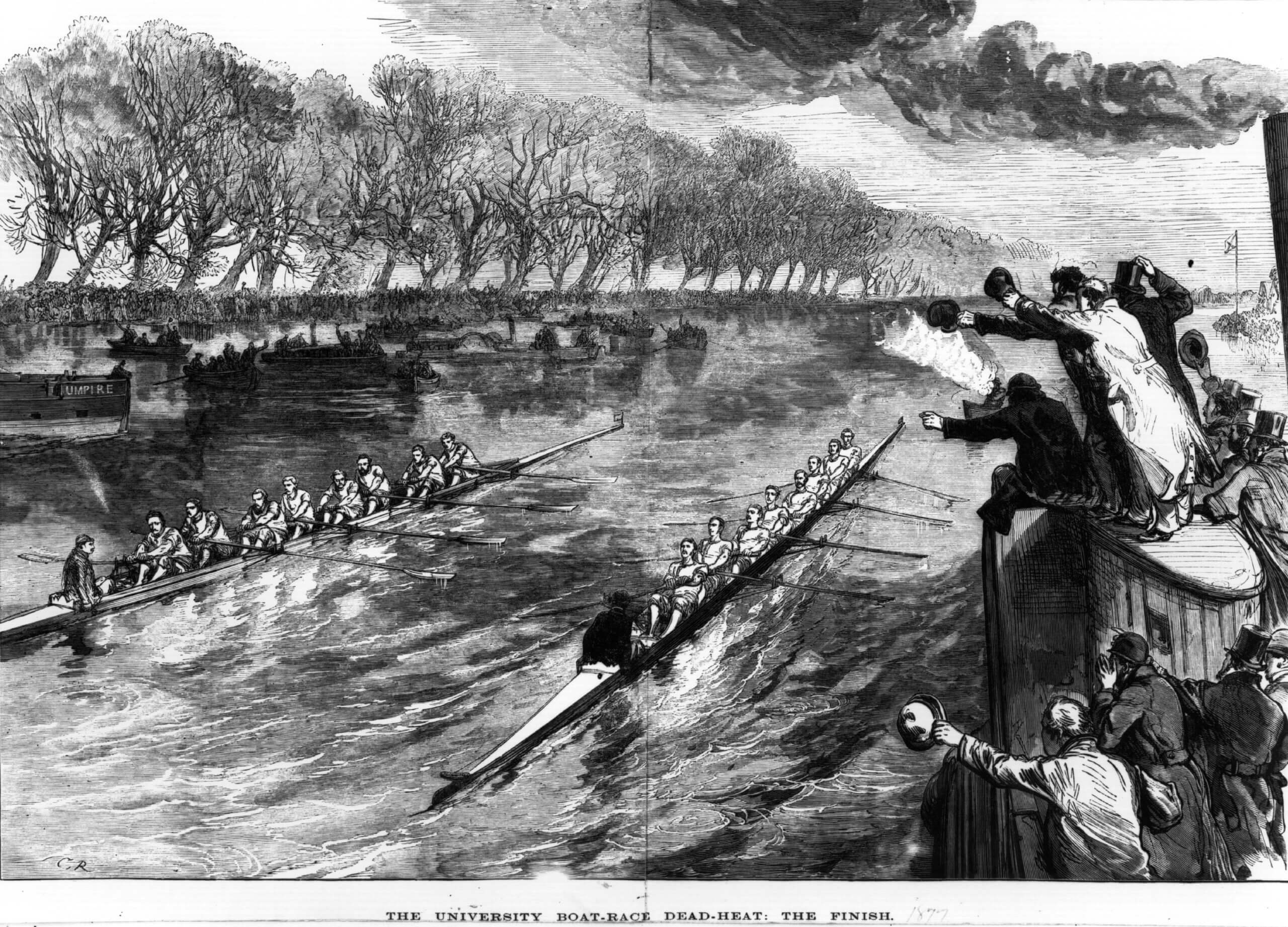
The dead heat of 1877 (Hulton Archive/Getty Images)
In 1987 some American rowers at Oxford tried to kick out their coach Dan Topolski over training disagreements. Topolski stuck around-and so did Oxford’s win-with a weakened team nonetheless.
There was even jail time after the 2012 race-not for anything on water but because protester Trenton Oldfield swam into both boats during the event to protest elitism and government cuts. He got six months for causing public disturbance.
This year though , things have escalated big time. There’s been huge arguments about which students can actually compete , which many are calling ‘a new low’ between these old rivals.
Students doing PGCEs (that’s postgraduate teacher training mixing uni study with school placements) have been banned from racing for the first time ever.
Three Cambridge rowers , including World Championship silver medallist Matt Heywood , got ruled out after Oxford challenged if they were allowed to compete.
Heywood said : “It’s safe to say that this decision doesn’t align with any values of sportsmanship or race spirit that I have known in rowing , and that I feel disheartened by the wider implications of this decision on my future vocation.”
Ex-Cambridge rower Imogen Grant , who won gold at Paris Olympics last year , used less formal language online : “This is an insult to teachers everywhere and a desperate ploy from Oxford to gain an upper hand in the most slimy way.”
Melissa Wilson raced four times for Cambridge between 2013 and 2017.
She told The Athletic that all this eligibility fuss just makes an already fierce rivalry even stronger. And trust me , those crews don’t exactly hang out together after finishing !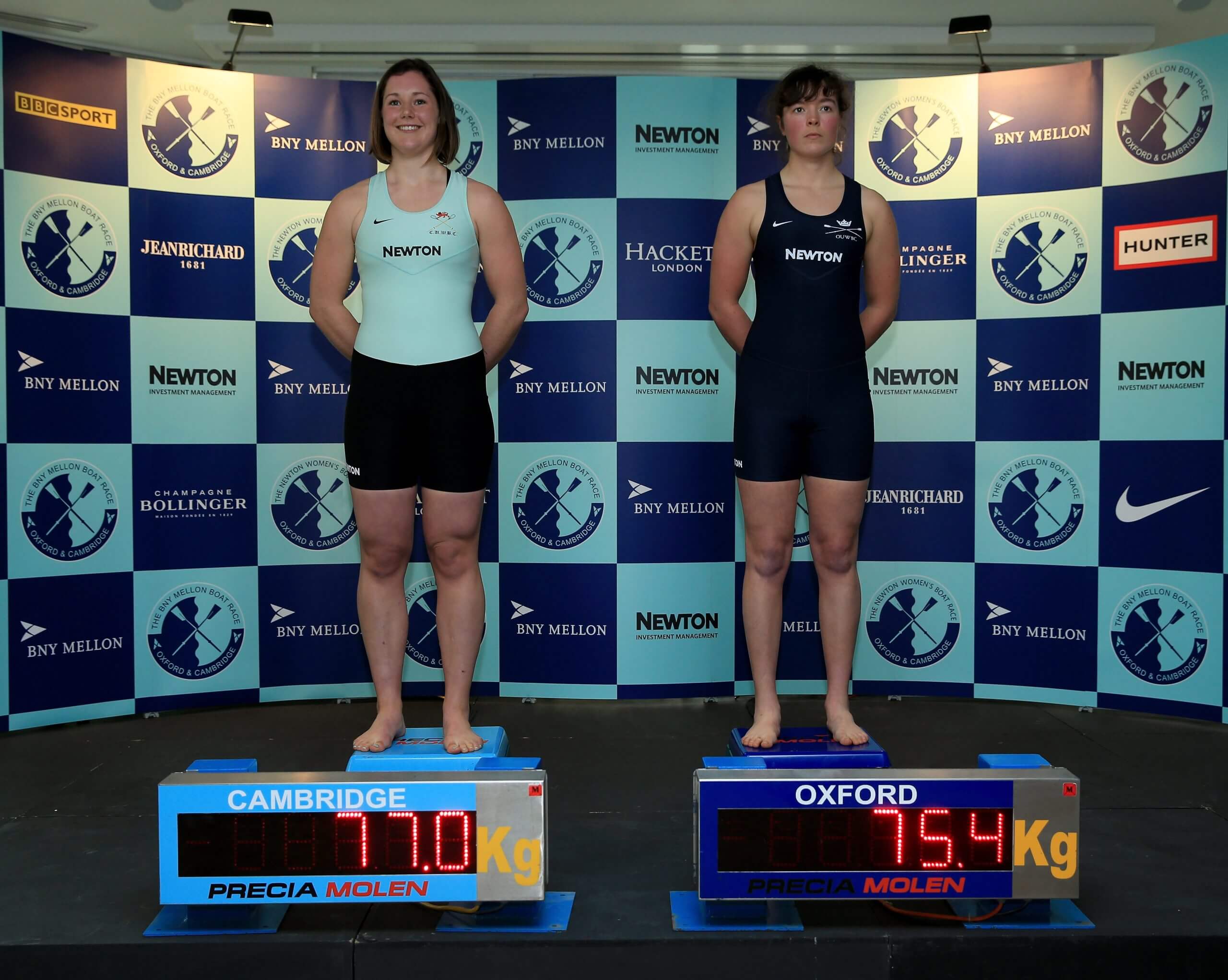
Melissa Wilson, on the left, at the 2014 weigh-in (Richard Heathcote/Getty Images)
“Nope, absolutely not,” she laughs.
“I finished uni nearly ten years ago now so it’s settled down for me but when you’re there you’re almost tattooing your loyalty onto yourself.”
“I hadn’t even been to Oxford until my second year at Cambridge-I imagined it as dark and gloomy with stormy skies but actually it’s quite beautiful.”
“That’s just how your mind works-you get slogans plastered everywhere about beating Oxford-and they’ve got similar stuff against us.”
“But winning really comes down to how much pain you’re ready to put yourself through-that need comes straight from that deep rivalry inside your head.”
Apart from mindset though there are loads more factors making or breaking your chances-including tackling tricky parts along the Thames’ four-mile course from Putney to Mortlake where currents shift constantly.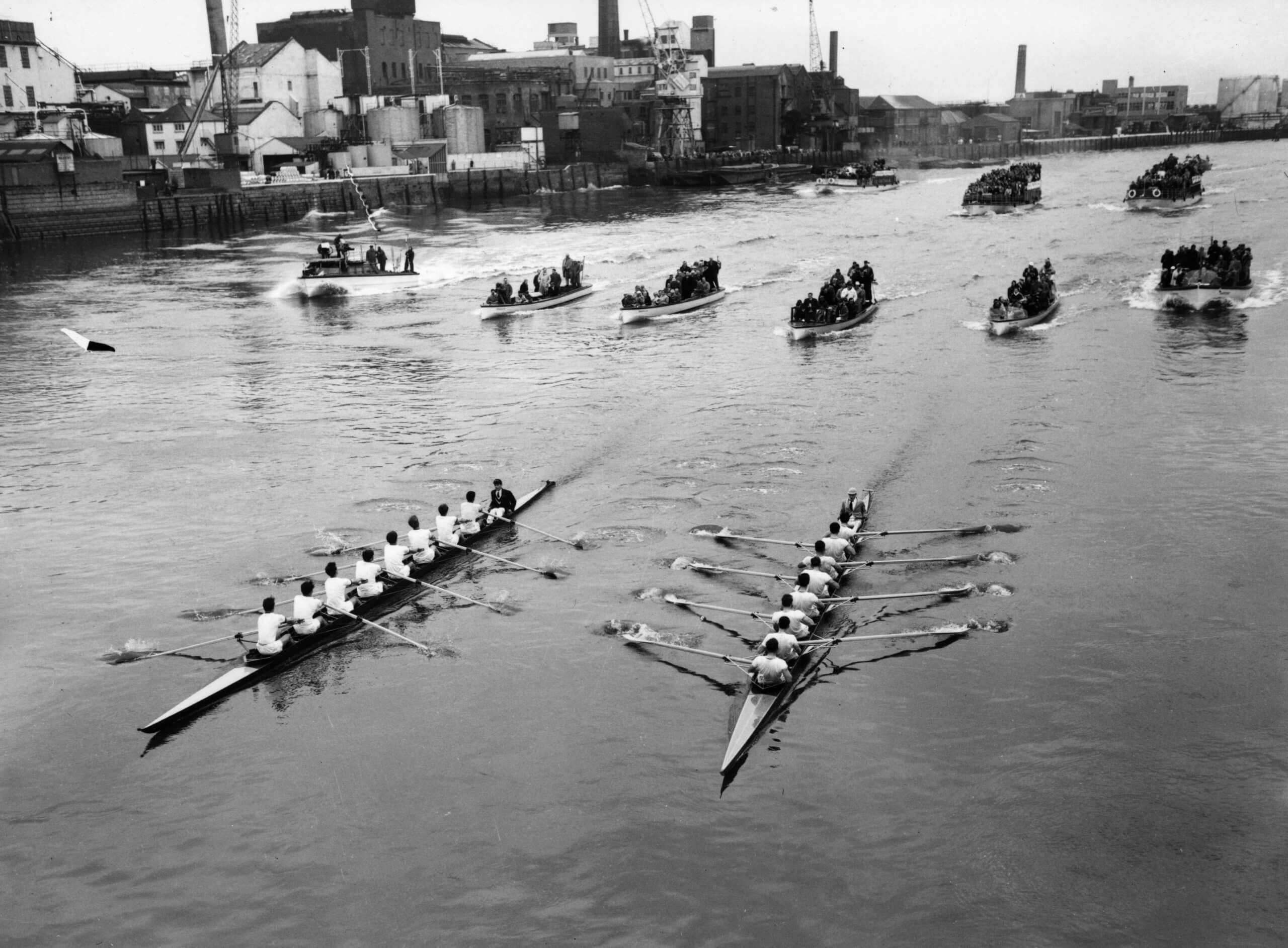
Action from the 1962 edition of the boat race (Central Press/Getty Images)
Olympic rowing usually happens on calm lakes made just for racing-but here you get thrown into unpredictable conditions along one very dirty river.
The Thames carries high levels of E. coli bacteria; environmental group River Action says if it were officially tested as swimming water it’d be rated ‘poor’ under current rules.
No matter-nothing except war or Covid stopped this event since 1856-the women have raced every year since ’64. Rain or shine-it goes ahead! This might be its only year threatened by sneaking teachers into boats.
The water quality worries folks too. Throwing winning coxes into such polluted water isn’t as fun anymore.
“It’s worrying we’re still dealing with unsafe Thames waters,” said five-time Olympic champ Sir Steve Redgrave recently. “Rowers and everyone deserve better.”
Jumping in th e River Thames: not advised these days (Naomi Baker/Gett y Images)
So don’t go sinking like both men’s boats did back i n1912. But how else does t he river affect things ?
Wilson explains:“It can make or break you – totally decide who wins.”
“When streams run strong i t gets tough because t he tide pushes against your blades. The whole b oat will drift away if y ou don’t fight hard enough.”
“Imagine having fast tide going one way but wind blowing hard t he other direction -whitecaps form o n top o f waves. Boats cope pretty well usually, but back i n2016 conditions were nuts. Cambridge women nearly sank completely.”
“From steering side, it’ s probably toughest r ace o ut there, because knowing instinctively w here fastest current flows matters tons.”
No lanes here either-which means if boats get close their oars clash often. This is strictly between two clubs so normal rowing rules don’t apply.
This race gets rough sometimes, the prep serious, and training brutal. As many as fifty tryout athletes whittled down till only two teams remain per gender. They’ve trained all winter while balancing studies too.
“Yeah, it’s intense,” Wilson adds.“But all tha t effort gets you ready perfectly-mentally, a nd physically. You gotta bring everything you’ve got.”
“There’s culture involved, rivalry pumping, you never raced these guys before either.”
“Sure, it’s university sport, but athlete level is super high.”
“Winning means everything. Not like you’ll do this next week-this could be once-in-a-lifetime. No holding back – full throttle twenty minutes.”
(Top photo: Tolga Akmen/AFP via Getty Images)
Source link
