
1. Introduction
The Sustainable Development Goals (SDGs), created as part of the 2030 Agenda for sustainable development, consist of 17 global goals aimed at promoting economic, social, and environmental sustainability together. Achieving these goals requires cooperation from everyone-from global organizations down to local communities. In studies about sustainability governance, there’s been a lot of talk about how local governments play a key role in putting these global goals into action within their own areas. Recent research especially highlights how local governments kickstart, carry out, and keep track of SDG-related efforts locally (Reddy, Reference Reddy2016). They’re seen as institutions responsible for delivering essential services to their communities (Lucci, Reference Lucci2015) and acting as bridges between different local groups interested in sustainability issues, like what’s been observed in Japan (Masuda et al., Reference Masuda, Kawakubo, Okitasari and Morita2022).
Even though there aren’t any worldwide rules telling local governments exactly how to act on the SDGs practically, many are stepping up in various ways. A common method is adapting global targets and tracking progress locally through reports called Voluntary Local Reviews (VLRs) (Ciambra, Reference Ciambra2020). By 2022, 95 such reports had been made by cities across Europe, Asia, Latin America and the Caribbean, North America, and Africa (Ortiz-Moya & Kataoka, Reference Ortiz-Moya and Kataoka2022). In some countries like India (Guha & Chakrabarti, Reference Guha and Chakrabarti2019), Indonesia (UCLG, 2018), and Japan (Masuda et al., Reference Masuda, Kawakubo, Okitasari and Morita2022), local SDG actions are coordinated nationally with progress tracked at the country level. Here there’s an emphasis on holding governments accountable by monitoring results closely while depending on them to provide services tied to the SDGs locally (Lucci, Reference Lucci2015). More recently though there’s been a shift towards grassroots-driven approaches that mix different kinds of actions. For example in places like the UK or Australia where national leadership isn’t clear-cut when it comes to SDGs localization-local governments have begun voluntarily weaving the goals into their operations (Fox & Macleod, Reference Fox and Macleod2021; Perry et al., Reference Perry, Diprose, Taylor Buck and Simon2021). In Australia specifically they engage with communities through visioning exercises plus policy analysis and decisions based on those visions while also keeping track of progress regularly (Ningrum et al., Reference Ningrum, Raven, Malekpour, Moallemi and Bryan2023). Some also get guidance from regional or international networks like ICLEI – Local Governments for Sustainability or United Cities and Local Governments (UCLG), among others. Since adopting the SDGs is voluntary with flexible interpretation options available-this rise in bottom-up initiatives can be seen as filling what Hajer called an ‘institutional void’ where national leadership lacks direction on this topic (Hajer 2003).
Still despite examples like these some researchers point out that uptake varies widely-with most activity clustered in Europe but fewer efforts seen across Latin America or Africa except where national-level support exists along with decentralization such as Benin or South Africa or Indonesia (Bilsky et al., Reference Bilsky, Moreno and Fernández Tortosa2021; Perry et al., Reference Perry, Diprose , Taylor Buck , and Simon2021). Many places see little local action on the SDGs so far while ongoing projects could be bolder or more meaningful overall-and better coordination between government levels remains lacking if we want real change globally aligned with these goals (Horn & Grugel , Reference Horn and Grugel2018 ; Guarini et al., Reference Guarini , Mori and Zuffada2022 ; Tremblay et al., Reference Tremblay , Gowsy , Riffon , Boucher , Dubé and Villeneuve2021 ). That means it’s urgent we figure out ways to empower current AND future local efforts that connect well globally but also fit their community needs perfectly. When we say “enable” here-it means giving those efforts enough strength plus skills so they can start up properly then keep going strong enough until they reach their aims.
Since launching back in 2015 there has been growing research suggesting how best to enable these kinds of actions locally-examples include building capacity for working across government layers better (Mejía-Dugand et al., Reference Mejía-Dugand , Croese and Reddy 2020 ), training city officials to use tools integrating various sectors (Tremblay et al., Reference Tremblay , Gowsy , Riffon , Boucher , Dubé and Villeneuve 2021 ), creating guidelines around evidence-based reporting (Giles-Corti et al., Reference Giles-Corti , Lowe and Arundel 2020 ), raising political awareness among elected officials about SDGs importance (Guarini et al., Reference Guarini, Mori and Zuffada 2022 ), setting up dedicated sustainable development departments inside councils (Krellenberg et al., Reference Krellenberg, Bergsträßer , Bykova, Kress and Tyndall2019 ) plus encouraging peer learning between cities along with partners nearby
(Leavesley et al., Reference Leavesley ,
Trundle, and Oke
(Leavesleyetal., ref))While helpful,
we think what really helps enable these actions should dig deeper than general tips.
What often gets overlooked is that running successful local SDG projects depends heavily on who’s involved-their choices matter greatly because their motivations, purposes, and situations all shape outcomes deeply. In sustainability studies, a lot has been said about individual agency driving change(Fischer & Newig,
Reference Fischer
&
Newig
2016).
People hold beliefs shaping how they picture a sustainable future, the steps needed, to roles played(Pattersonet. al,
Schulz & Siriwardane,
Stirling).
In this context, different people might care about different things relatedto SDGwork, andthushaveverydifferent ideasaboutwhathelpsmakeitwork.
The specific results aimedforinanylocalprojectcomefromtheseactor choices, influencedbytheirbackgrounds, theircommunity’sneeds, andtheirideasofhowthe SDGsfitintoallthis.
To approach enabling local work effectively, we must understand that actors don’t all see things alike. Differences exist not justinresourcesorcontext, butalsoinvalues, purposes, andviews. That shapes preferences but also sometimes causes disagreements over what counts as good help so far research hasn’t looked closely at these differences through actors’ perspectives. Some mention “no one-size-fits-all” approachexistswhen supporting localsdgsactionsbutdonot go intodepth(Valenciaet. al
)(Valenciaetal.).
This paper thus tries toreveal different views people involved have regarding support neededforlocalsdgsactions. By diggingintotheseviews, we wanttounderstandbetterthewaysandsituationsenablersmayhelpwithoutoverlookinglessvisibleor minority opinions.
Most advicesofarcomesfrom“frontrunner”cities(Pateletal
)(Pateletal.)whichmightnotfitelsewhere. Although some lessonsdoapply, we suspect timing, whetheratinitiationormaintenance, and which actor mobilizes supportmatters. Withoutaddressingperspectives, this nuancecanbemissed.
So, wespecificallyask: Whatarethevariousviewsamonglocalauthorityactorsaboutwhatenablesthelocalsdgprocess?
For clarity, this studydefinesactorsasindividualstaffmembersworkingonsdgrelatedtasksinsideaustralianlocalgovernments.
We focus here mostly on Australian cases, becausethere, nationalcoordinationismissing, makinglocalgovernmentfreeertochoosehowtheyact. They facechallengeslike lackofguidance, yetdiversityacrosscouncilsallowsustoseeavarietyofviewsaboutwhatsneededtocreateeffectivelocalsdgactions. Aspreviousstudiesshow, themajorityofsdlocalprojectsinthecountryarerunbylocalgovtstaff(Ningrumet. al.). While our aim was initiallybroader, thedatapointsmainlytowardslocalgovernmentledefforts. Thisresearchuses Q-methodology-amixedmethodperfectforsmallergroups-tofindsharedopinionsandanalyzecontrastsaboutfacilitatinglocalsdgwork.
Thepaperisorganizedasfollows. Sectiontwocoversconceptualbackgroundsectionthreedetailstheqmethodologyapproach. Sectionfourpresentsthreeemergingviewsonsupportinglocalsdgs. Sectionfivediscussestheoreticalpracticalimplications. Finallysixwrapsupwithconclusions.
2. Methods
2.1 Q-methodology
To answerourquestions, weused Q methodologybecauseitisgreatatfindingavarietyofopinionsaboutaparticulartopic-inourcase, enablinglocalsdgs-andexploringwhypeopleholdthosedifferentsets-ofbeliefs(Brown1980).
Increasingly, Qmethodologyisinvokedinenvironmentalsocialsciencewherestakeholderswithdifferentrolesandtakespartindecisions(Sneegasetal.).
Datacollectionheremeansaskingparticipantstoresortstatementsontoagrid(fromstronglydisagreetostronglyagree, etc.)Theprocessfollowsstandardsteps(Robbins&Krueger2000; Watts&Stenner2005): First, pickaparticipantgroup(P-set)representativeoftopicinterest. Thengatherlots-ofstatements(concourse)capturingallsubjectiveanglesfrominterviews, reports, literature. Next, siftthosedowntoamanageablesubset(Q-set)stillcoveringspectrum. Participantsrankthosesentencesonthegrid. Afterwards, youcanconductinterviewsfordeeperunderstanding. Finalstepisfactoranalysisusingsoftwareidentifyingclustersbasedonparticipantssortingpatterns(Figure1).
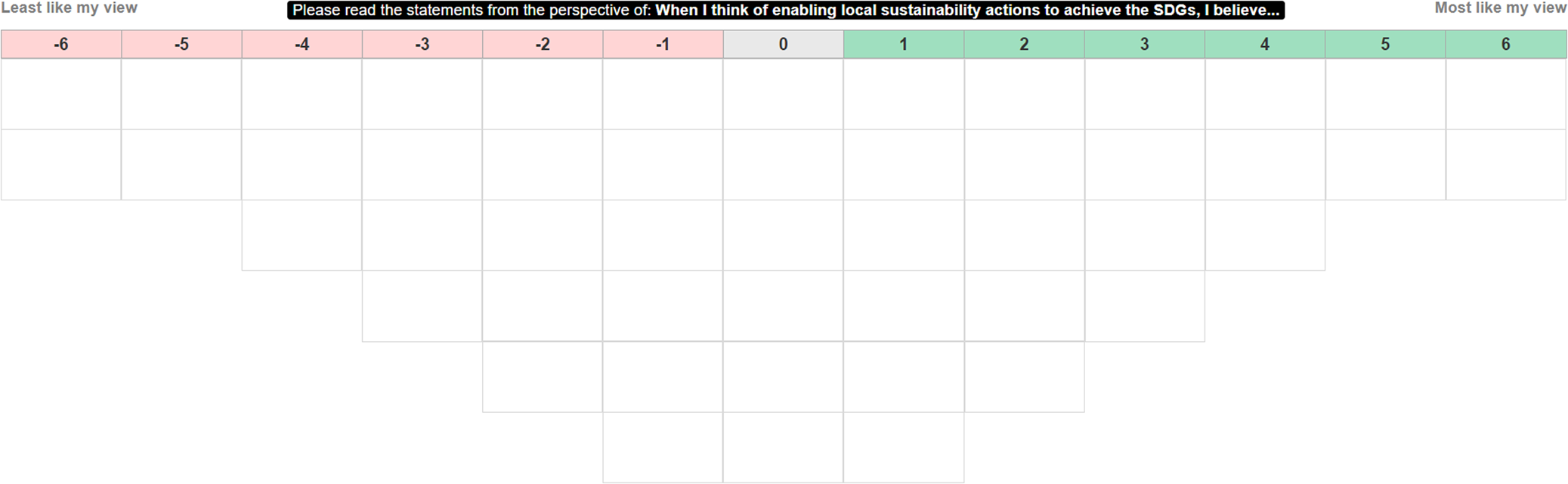
Figure 1. The grid used during Q-sorting.
Thenextsectionsexplainshowwemadeuseofthemethodtocollectandanalyzethedata.
2. 2Participants(P-set)
Good P-setselectionmeansthatparticipantshavethoughtfulwell-developedopinions(Webleretal2009 ). Asdescribedabove, thisstudylooksataustralianlocalgovernmentstaff’viewsenablinglocalsdgactions. Wepickedour P-setfromapreviousstudyby Ningrumetal.( )thatincluded22people(staffandelectedofficials)across14councilscoveringadiversemixofdifferentsizeslocationsandasdgengagementstyles. Of20peoplecontactedforthiscurrentwork, wehad11join(from9differentcouncils)(Table1). Because Australiahasnodirectnationalstrategyonlocallyimplementingsdgs, giventhelimitednumberofidentifiedefforts, thissamplerepresentsbroadtypeswithinthenation. Fordetails, Qmethodologystudiesusuallyfocusmoreondepththanwidthintheparticipantcount(Brown1980); Reviewby Sneegasetaldemonstratedenvironmental Qstudiesrangedbetween7to386subjects.
Table1. Listofparticipatinglocalsgovtswithnumberoftheirstafftakingpart.
2.3Concourseand Q-set
In Q-methodology, a“concourse”meanscollectingastatementsetthatcoversawidevarietyofenvisionedtalkaroundatopic(Sneegasetal ). Hereweturnedtotheinterviewdatafrom Ningrumetal.( )
Whosethoughtsweredirectlyrelatedto Australian SDGlowndownexperience. Wepickedtheirwordsbecausetheystillreflectissueslikeenablers, challengesetc. inasharedsetting. Sincewehadconsenttopublishthesevoices, itwasperfectforourgoal. Moreover, Ningrumetl.’sstudyaskedforopenanswersdescribeengagementprogressincludingsupportbarriers. Thismakesthesestatementshighlyrelevantforallparts. Theinitialpoolcontainedaround200phraseslinkedtosupportorbarriersfoundwithinlocalactioncontexts. Toreduceitems, focusedthemeworkwasdoneusingalistofdifferentenablersidentifiedbefore(Ningrumetal.), whichcameupwith30maintypes. Theresultantfivecategorieswere:( )Participation,( )Resources/support,( )Collaboration,( )Leadership/capacity,( )Feasibility/duration. Fromherewematchedthemesfoundineachstatementwiththosefivecategories. Mostdidalignbutafewfelloutside(e. g. top-down, nationalgovt, future-thinking). Finalchoiceswenttorelevancetopriorlistspluspotentialtodriveinterestingresponses. Particularlyforthefourdifferentkindsofstatementsabsentfrompriorlist, butthoughtworthkeepingbecausetheymighttriggerthoughtfuldiscussion. Ourfinal Q-setcontained50items, widelyacceptedamount(Watts&Stenner2005), checkedfortypoandrelevancebytogetherteam. Thenfivepilotteststodoublecheckclarityandsuitabilityweredone(outsideparticipants).
2.4Q-sortingprocess
Due todistancebetweenparticipantsacrosstheaustraliancontinent, thewholeactivitywasdoneonlineusing Easy HTMLQ. First, theparticipantsseparatedthestatementsintothreegroups:(leastlikemyview),(neutral),(mostlikemyview). Nexttheyputthosestatementsonagridrunningfrom−6(mostdisagree)to+6(mostagree).
Aftersortingwederivedexplanationsviaexitinterviews(wherepossible)orpost-sortwrittenfeedback. Thesequalitativedetailshelpedusunderstandwhyparticularstatementsendedupincertainplacesespeciallyattheapexpositions(+/-5,+/-6levels). Wealsoaskediftheywantedcommentsonotherkeypointsregardlessplacement. Noneofferedadditions. Interviewswereheldwitheightpeoplewhilethreefilledformsoursubmission.
2.5Analyzing Q-sortresults
Weprocessedresultsus ing KADEsoftware(Banasick2019)toperformfactoranalysisdesignedforpersons. Q-analysistypicallystartschoosingthenumberoffactors(basicmeaningsharedbygroups)sinceresearcherexaminesmultipleiterations. Lookingatresultsforsimplicity, separation, strongvarianceaccountedsatisfaction, usecriterialike Eigenvalueaboveone, minimumsignificantloadings, etc. Webleret. al. Recommendedthisprocedure. Forourdataset, a three-factormodelworkedbest. Itcaptured53%variancesatisfyingthreshold. Someobservationsloadedstronglyinfactortwoormore(confounded); theseweredroppedbeforefinalinterpretation(Watts&Stenner2005).
2.6Interpretation
Wederivedinterpretationsfromaveragedcomposites(factorarrays)-idealtypicalprofilesrepresentingtwoormoresimilarparticipantperspectives. Webler. methodcalled“cribsheet”(Watts&Stenner)helpedbuildclearstoriesaroundeacharray. Bycomparinghighestrankeditems, differences, trends, wegeneratedhypothesisandtiedthosebackintoqualitativefeedbackplusexternaldocuments(sustainabilityplansetc.). Fromthisemergedthreedistinctnarrativesorfocalpointsregardinghowtoprovideeffectivehelpforsdgprojectslocallyknownashereinasperspectives.
4. Discussion
4.1Putting Enablersinto Context
Bylayinginfrontthreedifferentwayspeoplethinkaboutsupportfortheseactions, thisstudyhighlightssomeprioritiesforeachgroup. Takingmanyoptionsavailable, enablerstype Xmightbefavouredbysome, butignoredbyppllikewiseothers. Altogetherpriorityrankingdependsnotjustonavailabletools, butalsolocalvisions, purposes, andcircumstanceswhereactionoccurs.
Thishelpsusputliteraturerecommendationsinsidestoriesoftargetusers. Examplesliketrainingcitystaffintegratedtoolsets(Krellenberg..), dedicateddepartments(Giles-Corti..), managingevidence(Guarini..)couldservebetterwhentheirmindsetsmatch Perspective Onewhereembeddinginthestructurematters. Othersfocusedonnetworkbuilding(Mejía-Dugand..), peerlearning(Leavesley..)fitperspective Twowell. Communityplanning(Szetey..)fitsmore Perspective Three. Clearlyresource/timeconstraintsmeanprioritizingiskey. Andsinceperceptionconnectstoknowledge/resources/context, itletsustailorenablerstrategiestoeffectivelyreachgoals.
Thisstudyalsoexposeshowthesame“enablementaction”(e. g. politicalawarenessraisingmentionedby Guarini..)maybehavedifferentlydependingonhowactorsframetheirpurpose. Politicalawarenesscouldrangefromgettingleaderslinklong-termplans SDGs, topromptpoliciesfavorables DGrealization, tocoordinatingregionalpartners. Multiformsrequirecustomattention.
Beyondgovtenablers, suggestionsdirectingtowiderplayers(nationalgovts, CEMR, Bentz.)gainclaritythroughlensingperspectives. Supportcouldmeangovernmentpushstatelevelengagement, incentivesincl. reportingintegration, toregionalmainstream. Sensitivitytospecificsituationsraisesconditionsbetterequippedtocraftpoliticssupportapplyingrightway.
Animportantnoteistheinclusionof Goal17(partnerships)-valuedinallsidesasitdrivessuccess. Linkagesmatterforsustainabilityembedding(networksin Perspectve One),(collaborationforallof Perspectve Two),(accountabilitycommunityinaspect Three)
Wemeanbynoproposingonlyonesingleperspectiveexistsineverylocale. Basedonaustraliansettings, wesketchwhattypeexistamongkeystaffworkingcloselyincouncil‘sdgprojects. There’sroomtomoredeeplyexploredynamicsinsideorganizationalunits, councilleadership, higherupswhichwerenotincludedhere.
Acknowledgingpossibilitiesofdifferentvoicesoutsidethecountrycontext, futureworkshouldlookinternationalcasesespeciallywherestrongnationalcontrol(examples Indonesia India), civilinitiativeslead(U. K. South Africa)(Bilsky..). Ourpaperhopefullyopensconversationstoexplorecomplexitiesbeyondfirstglance.
B4.25Making Local Sdgs Globally Relevant And Locally Fit
Apartfromaddingcontexttoliterature, enablertypesfoundhelpassessongoingeffortstopromoteglobalsustainabledevelopmentvialocalizedactions. Doesthisapproachmatchworldwideneedsoftransform?
Thevoluntaryflexibilityofthe Sdgsletsmunicipalitiesadaptgoalsbasedontheirowndataandinfrastructure. Theycanembedtargetsinospatialdevelopment(Fox&Macleod..), resilienceplans(Croese.), integrateddevelopmentplans(Krantz&Gustafsson..), monitorprogress(Tremblay..). Thesearevaluableformsbutjustletthempickwhatevermixdoesnotguaranteeholisticcoverage. Toaccelerateprogress, wewantmoreinclusivecommittmentsmeaningfullytouchingeveryaspectwhilestillhonoringlocalprioritiesyetallowglobaltracking. Comparedtotraditionaltop-downdesignintentions, it’stobeamplifiedbottom-upmovementwithguidancetowardbothdimensions. Globalsupportshoulsstrengthenlocalactionsnotreplace. them.
Ourresearchaddstwofold. First, itclearlyshowsdiverseperceptionsamongstaffforexistingefforts. Looksatinteractionsofthedfferenttypesengagementspreadalongthreads. Perspective Oneembedsissueintegration. Perspective Twobridgesstakeholders. Perspective Threemakescommunitycentral. Allhelpgoodgovernance. Butwilltheylendthemselvestobetteraggregatedmonitorednationwide? Evidencesofarleansnosobetterreports(e. g. Ciambra, UCLG..)
Second, bysurfacingimportanceofframeworkscanassistpromotingbroaderaction. Futureworkshoulddesigntestnewwaystoempoweractorsinnavigationtowardinclusiveprogress. Notjustcapacitybutactivelyshapingperceptions, valuejudgments, intentions. Thenallowusdevelopcompatiblemethodsbalancingglobal-localneeds. Shapinghowcommunicate SDGSdiffersignificantlyaffectspolicypractice.
Futurestudiesmaybeconsiderconnectinginnerchangefields(valueworldviewbeliefschangingbehavior Abson.., Woiwode.., etc.)togetherwithgovernancemodeframework(Driessen.., Lange..)mappingactorinstitutioncontentfeatures. Interestinglyperspectivesherereflectmodes(decentralizednetworkinteractivepublicprivate, self-governanceknowledgeblendmodels).. Combinedtheyofferpathwaysbuildtransdisciplinaryknowledgemakinglocallyrootedgloballyconnected Sdgactionspossible.
Source link
